
Wembley Stadium
Fill the stands
90,000 seats
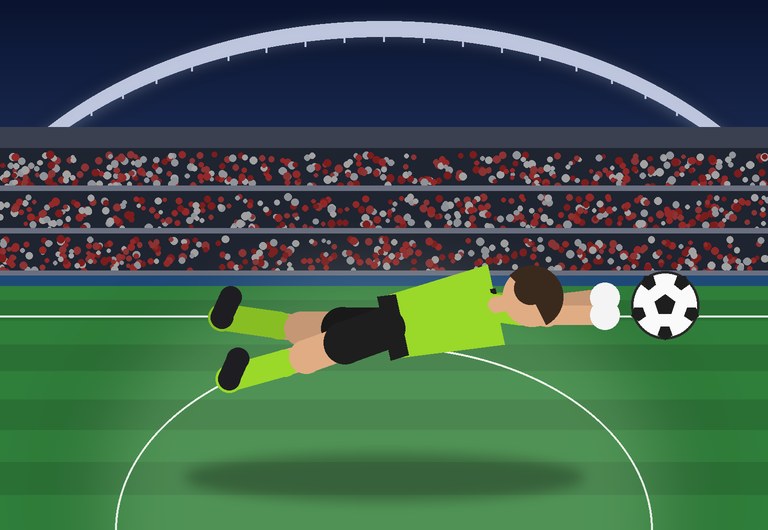
In north-west London, a giant white arch rises above the rooftops. It belongs to Wembley Stadium, the national stadium of England and, with 90,000 seats, the largest stadium in the United Kingdom.
The old Wembley
The first stadium on this site opened in 1923 and was famous for its two white towers at the entrance. It hosted cup finals for almost eighty years, and in 1966 England won the World Cup there, beating West Germany 4–2 after extra time. The old stadium closed in 2000, and its towers were taken down in 2002.
A new stadium with an arch
The new Wembley opened in 2007 with the FA Cup final. Its arch rises about 133 metres above the stadium and holds up much of the roof, so there are no pillars to block the view. Two parts of the roof can slide open to let sunlight reach the grass.
Big numbers
Building the new Wembley took 4,000 foundation piles, some of them 35 metres deep, and about 56 kilometres of heavy power cable. It hosts England matches, cup finals, concerts and many other big events.
Visiting tips
- Stadium tours take you behind the scenes, including the dressing rooms and the players’ tunnel.
- Wembley Park station is a short walk away along a wide path known as Olympic Way.
- On event days, arrive early: crowds of up to 90,000 people take time to move.
Stadium sheet
- City
- London, England
- Opened
- 2007 (first stadium 1923)
- Capacity
- 90,000
- Arch
- About 133 m tall
- Famous match
- 1966 World Cup final (old stadium)
- Roof
- Partly retractable